20-minute One-pot Garlic Parmesan Pasta (easy Weeknight Dinner)
Creamy, garlicky comfort made in a single pot in just 20 minutes—budget-friendly, fewer dishes, and perfect for hectic weeknights.
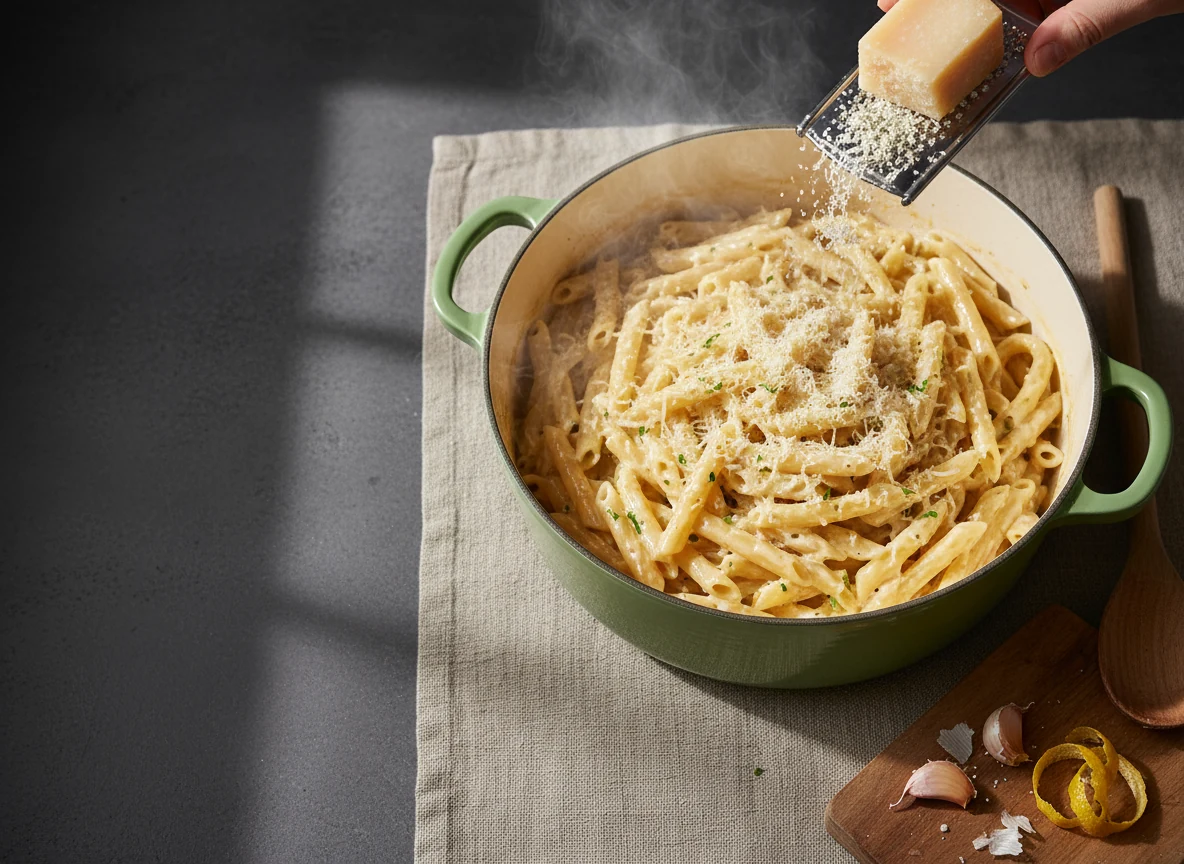
You’re hungry, you’re busy, and the sink already looks like a scene from a kitchen crime show. Here’s the move: one pot, real garlic, and a silky Parmesan sauce that basically makes stress illegal. This recipe hits that sweet spot of fast, cheap, and ridiculously satisfying—without tasting like a shortcut. If you can stir a spoon, you can nail this. And yes, it’s as good as the viral videos claim.
What Makes This Recipe So Good
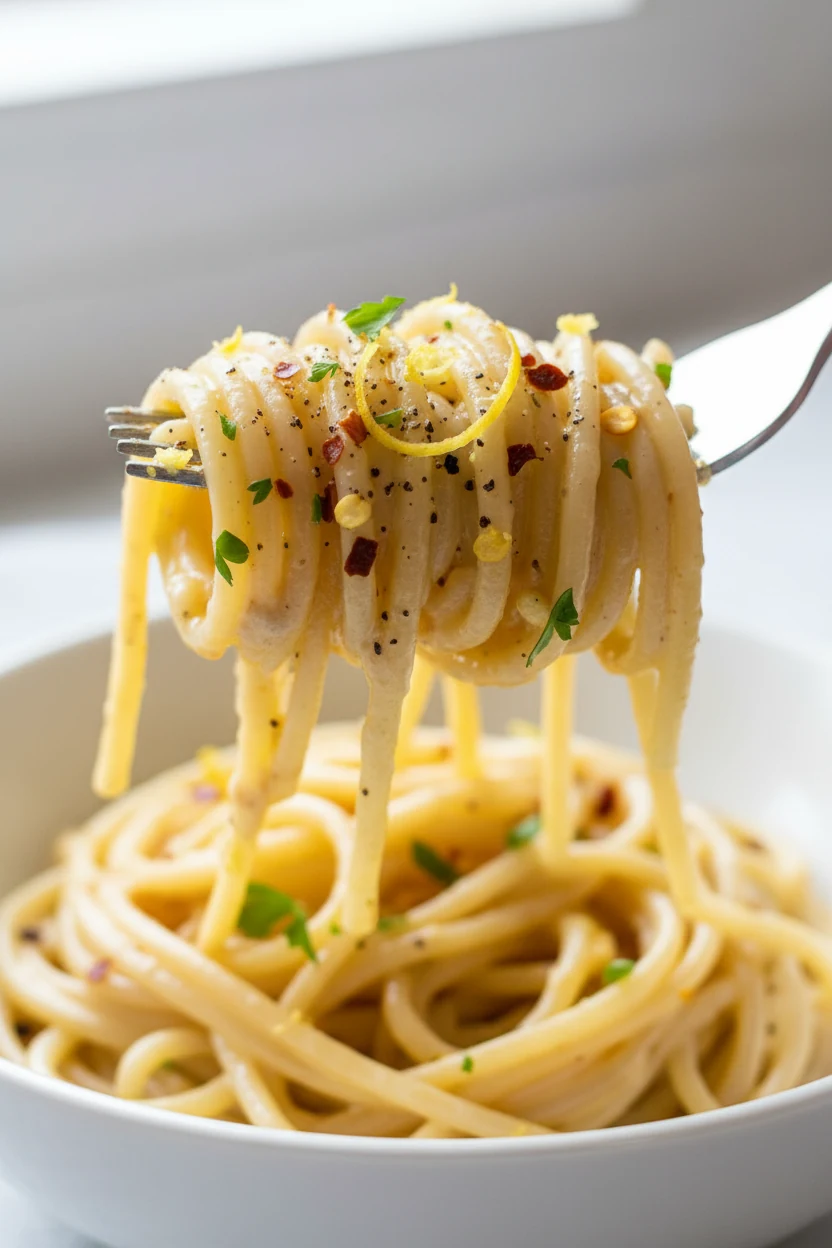
This pasta is engineered for speed and flavor with minimal effort. The starch in the pasta naturally emulsifies with butter, milk, and Parmesan into a glossy sauce—no separate pot, no heavy cream required. Fresh garlic gets bloomed in fat for maximum aroma, then the pasta absorbs broth for extra depth. The result? Restaurant-level creaminess, weeknight-level simplicity. It’s the kind of dish that makes you feel clever in under 20 minutes.
- One-pot wonder: Cook, sauce, and finish all in the same pot. Fewer dishes, faster cleanup.
- Balanced flavor: Garlic, Parmesan, and a touch of lemon keep the richness in check.
- Flexible: Works with long or short pasta and welcomes add-ins like spinach, chicken, or mushrooms.
- Budget-friendly: Pantry staples, zero pricey specialty ingredients.
- Consistent results: Step-by-step timing ensures tender pasta and ultra-smooth sauce.
Ingredients Breakdown
- 12 ounces pasta (penne, rotini, or spaghetti): Short shapes cling to sauce; long noodles feel fancy.
- 4 tablespoons unsalted butter: For richness and glossy texture.
- 1 tablespoon olive oil: Helps bloom garlic without burning.
- 6 cloves fresh garlic, minced: The star. Jarred paste? Hard pass.
- 3 cups low-sodium chicken broth (or vegetable broth): Flavorful liquid for the absorption method.
- 1 cup milk (whole or 2%; or use half-and-half for extra creamy): Adds body without heavy cream.
- 1 cup freshly grated Parmesan cheese: Freshly grated melts smoothly; pre-shredded can turn gritty.
- 1 teaspoon kosher salt, plus more to taste: Season the pasta and sauce properly.
- 1/2 teaspoon freshly ground black pepper: Brings a little bite.
- 1/4 teaspoon crushed red pepper flakes (optional): A subtle heat to cut richness.
- 1/2 teaspoon Italian seasoning (optional): Quick herbal boost.
- Zest of 1/2 lemon + 1 tablespoon lemon juice (optional): Brightens and balances.
- 2 tablespoons chopped fresh parsley: Fresh finish and color.
Step-by-Step Instructions
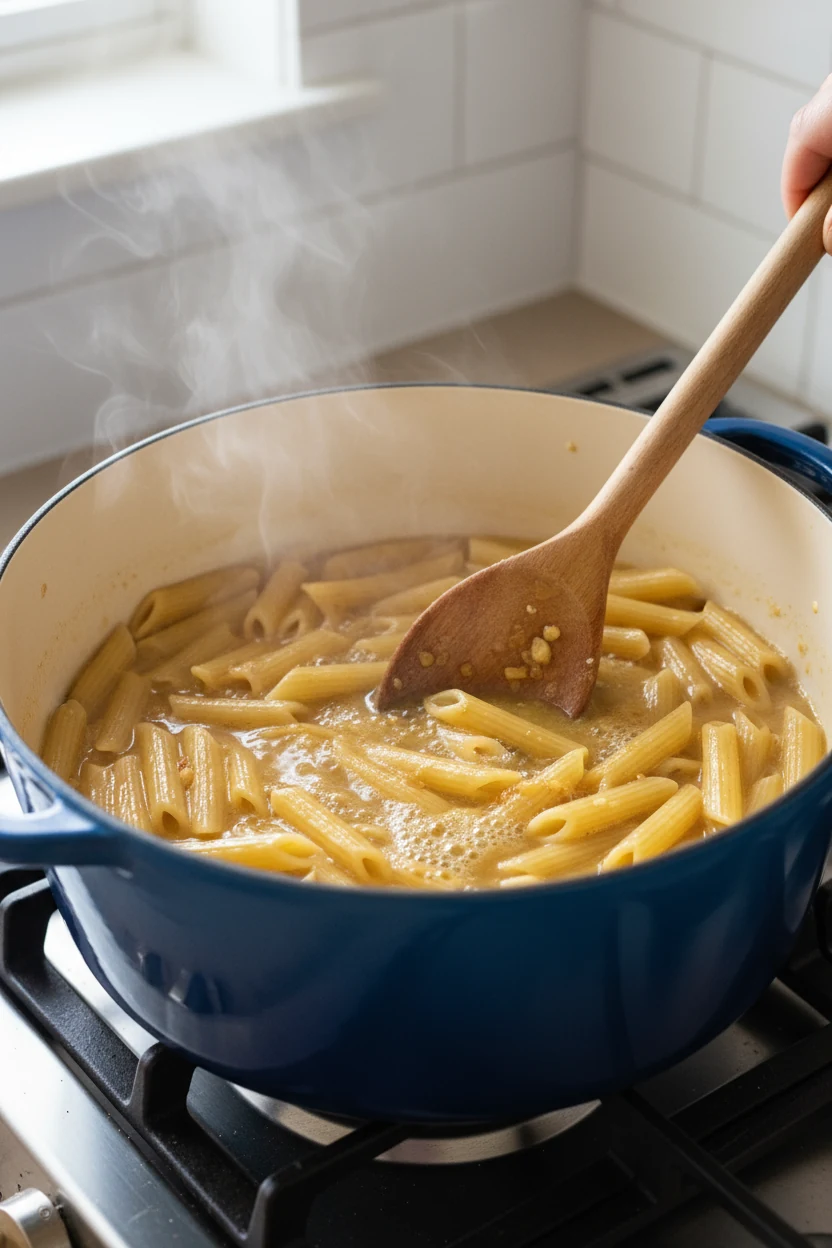
- Warm the pot: Set a large deep skillet or Dutch oven over medium heat. Add butter and olive oil and let the butter melt until foamy.
- Bloom the garlic: Stir in the minced garlic and cook 30–60 seconds until fragrant. Don’t brown it—if it turns golden too fast, your heat is too high.
- Add pasta and broth: Toss in the dry pasta and pour in the chicken broth. Add salt, pepper, red pepper flakes, and Italian seasoning if using. Stir to coat and submerge as much pasta as possible.
- Simmer: Bring to a strong simmer, then reduce to medium-low. Cook 7–8 minutes, stirring every minute or so to prevent sticking and encourage starch release. Liquid will gradually reduce.
- Add milk: Pour in the milk and continue to simmer 3–5 minutes, stirring often. The pasta should be just shy of al dente and the sauce slightly loose.
- Cheese time: Reduce heat to low. Stir in the freshly grated Parmesan a handful at a time, mixing until melted and glossy before adding more. Keep the heat gentle to avoid splitting.
- Adjust texture: If the sauce is too thick, splash in a bit more milk or broth. If too thin, simmer 1–2 minutes more. Aim for creamy and clinging, not soupy.
- Brighten: Stir in lemon zest and juice if using. Taste and adjust salt and pepper. Your taste buds pay rent—they should have a say.
- Finish: Fold in chopped parsley. Remove from heat. The sauce will thicken slightly as it rests.
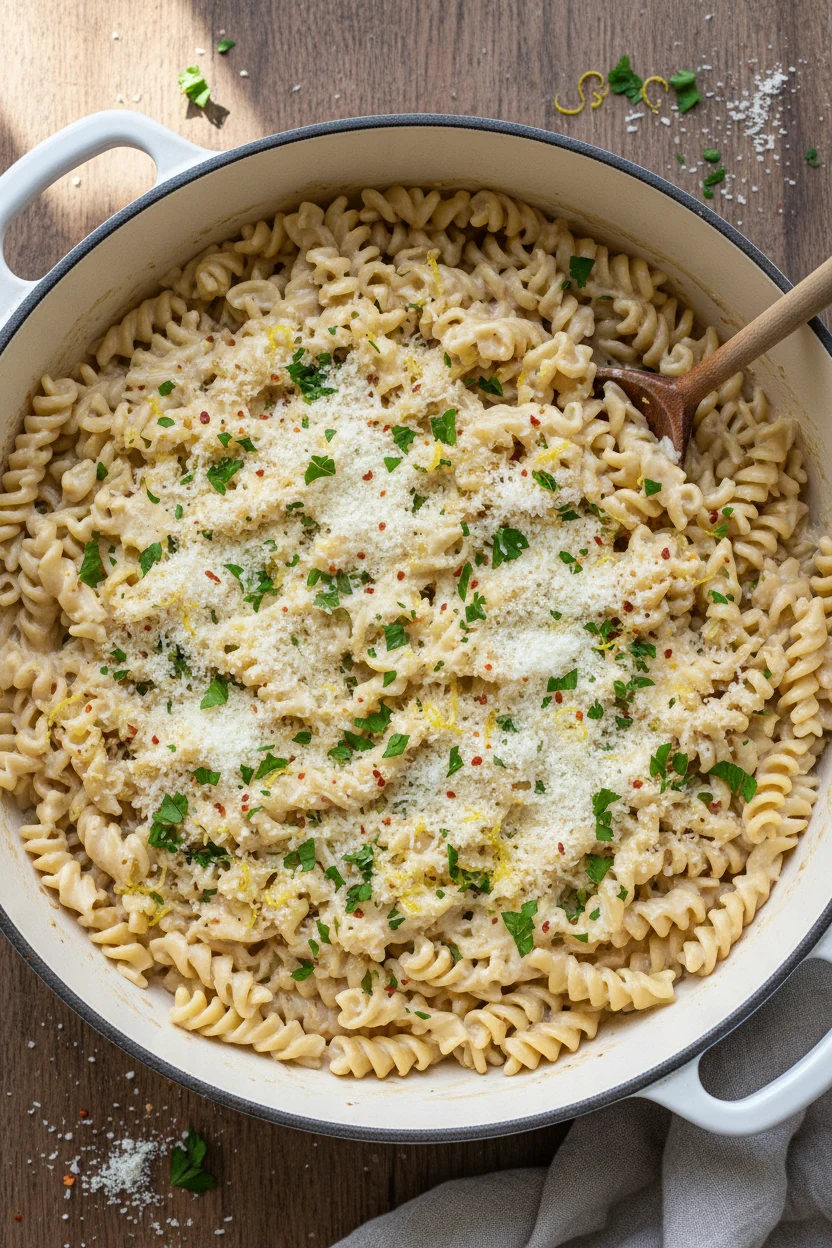
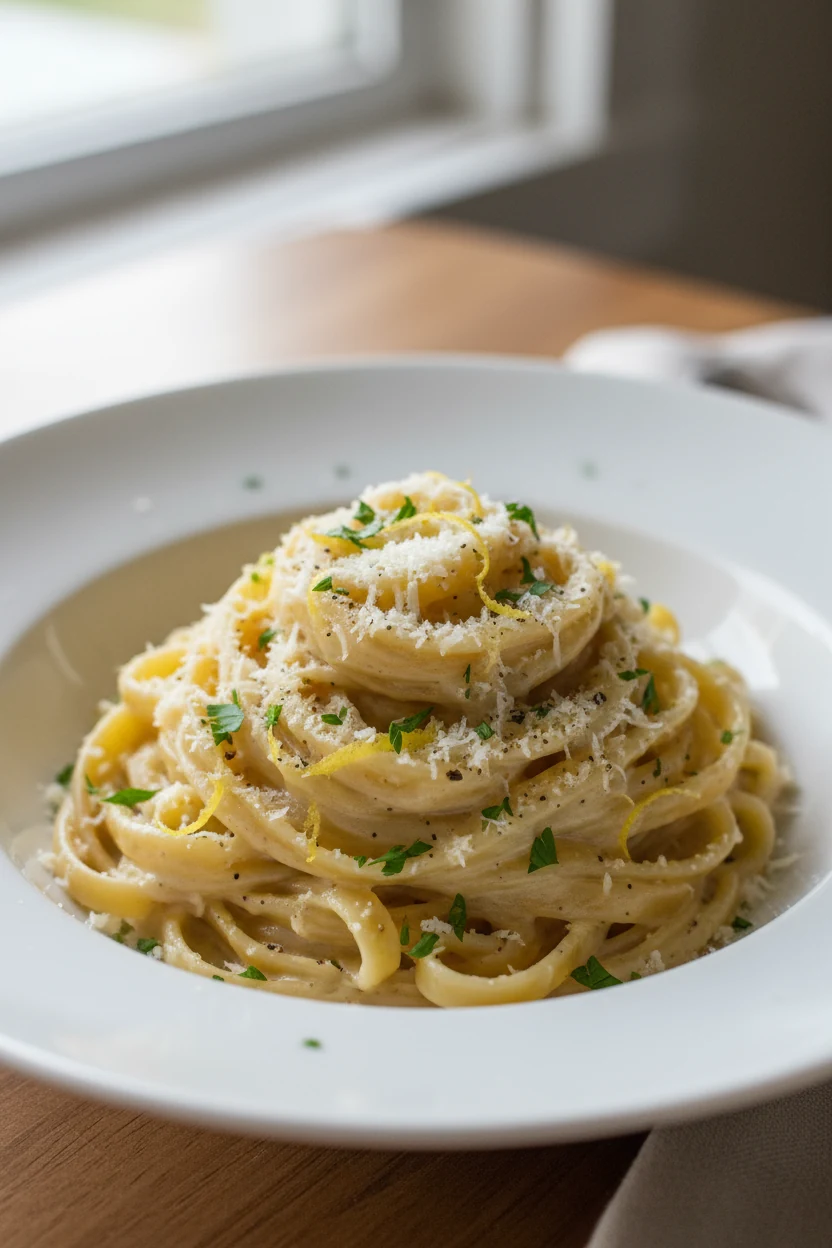
- Serve: Twirl or spoon into bowls. Top with extra Parmesan and a few red pepper flakes if you like drama.
Storage Instructions
This pasta stores nicely, but remember: creamy sauces tighten as they chill. Plan for a splash of liquid when reheating.
- Fridge: Store in an airtight container up to 3–4 days. Stir in a tablespoon or two of milk or broth upon reheating.
- Reheat: Low and slow on the stovetop over medium-low heat works best. Add liquid as needed and stir until creamy. Microwave in 30–45 second bursts, stirring in between.
- Freezer: Not ideal (dairy can separate). If you must, freeze up to 1 month. Thaw overnight and reheat gently with extra liquid.
- Make-ahead tip: Cook pasta slightly under al dente, cool, and reserve a small portion of broth/milk mix. Reheat with that reserved liquid to revive creaminess.
Nutritional Perks
- Protein + calcium: Parmesan adds a surprising protein boost and bone-friendly calcium.
- Garlic goodness: Garlic contains allicin and antioxidants—heart-friendly and flavorful. Win-win.
- Smart carbs: Pasta provides steady energy; pairing with a big salad or lean protein balances the plate.
- Reasonable richness: Using milk (or half-and-half) keeps this creamy without going full heavy-cream mode.
FYI, nutrition varies with pasta type and add-ins. Want lighter? Use 2% milk, go easy on the butter, and add greens like spinach.
What Not to Do
- Don’t use pre-shredded Parmesan: Anti-caking agents prevent melting and can make the sauce grainy.
- Don’t blast the heat after adding milk: High heat can cause curdling or a broken sauce.
- Don’t skip stirring: The pasta needs movement to release starch and cook evenly in one pot.
- Don’t under-season: Broth helps, but taste at the end and add salt. Bland pasta is a moral failing.
- Don’t overcook: The pasta should be just al dente when you finish; it will keep absorbing sauce off-heat.
- Don’t drain: This is an absorption method. The starchy liquid is the sauce—don’t pour flavor down the sink.
Mix It Up
- Protein boost: Fold in rotisserie chicken, seared shrimp, or crispy bacon at the finish.
- Veggie add-ins: Stir in baby spinach, peas, roasted mushrooms, or broccoli florets during the last few minutes.
- Lemony vibe: Add extra zest and juice, swap parsley for basil, and finish with a crack of black pepper.
- Spicy version: Double the red pepper flakes, add a pinch of cayenne, and finish with chili crisp for heat.
- Herb-forward: Swap Italian seasoning for fresh thyme and chives. Delicate but bold.
- Gluten-free: Use gluten-free pasta; reduce simmer time slightly and stir often (GF pasta can break more easily).
- Dairy-light: Use lactose-free milk and a sharp aged cheese you tolerate. For fully dairy-free, try a quality vegan Parmesan and unsweetened oat milk; texture will be less glossy but still tasty.
FAQ
Can I use any pasta shape?
Yes. Short shapes like penne and rotini cling to sauce beautifully, while spaghetti or fettuccine feel more classic. Adjust cooking time by a minute or two depending on thickness, and stir more frequently with long noodles to prevent sticking.
Why is my sauce grainy or clumpy?
Two usual culprits: pre-shredded cheese and high heat. Use freshly grated Parmesan and lower the heat to gentle when adding it. Add the cheese gradually, stirring until melted before adding more. If it’s still gritty, splash in milk and stir until smooth.
Can I make this vegetarian?
Absolutely. Swap the chicken broth for vegetable broth. The flavor is still rich and savory, especially with good Parmesan and garlic. IMO you won’t miss a thing.
How do I prevent the milk from curdling?
Keep the heat moderate and add milk after the pasta has simmered in broth for a few minutes. Once milk is in, reduce heat to low and avoid boiling. Stir frequently to keep everything integrated and silky.
Is heavy cream better here?
You can use it for extra-lush results, but it’s not necessary. The pasta starch plus butter and Parmesan already create a creamy emulsion. If you want richer texture, use half-and-half—that’s the sweet spot.
Can I add spinach or mushrooms?
Yes, and you should. Stir in a few handfuls of baby spinach during the last 1–2 minutes so it wilts but stays green. For mushrooms, sauté them right after the garlic until browned, then proceed with broth and pasta.
How do I scale the recipe?
Double everything and use a wide Dutch oven so the pasta has room. Keep the same method: simmer in broth first, then add milk, and finish with Parmesan on low heat. Stirring becomes more important with bigger batches—no one likes cheese boulders.
What’s the best Parmesan to use?
Use a wedge of Parmigiano-Reggiano and grate it yourself with a fine rasp or microplane. Freshly grated melts faster and cleaner, giving you a velvety sauce. TBH, the cheese quality makes or breaks this dish.
Can I make it ahead for a party?
Make it right before serving if you can. If you must prep ahead, cook the pasta slightly under al dente and keep a small amount of broth/milk mix warm. Reheat gently with that liquid and finish with fresh Parmesan and parsley for best texture.
Final Thoughts
This is the weeknight dinner that crushes cravings with hardly any effort. One pot, real ingredients, and a sauce that feels indulgent without being a brick. Keep the heat moderate, the cheese fresh, and your spoon moving—simple habits, elite results. When time is tight and taste matters, this pasta delivers like clockwork.
Bonus: it’s infinitely tweakable. Want heat? Add flakes. Want green? Add spinach. Want protein? Shrimp, chicken, or bacon slide right in. Make it your signature and watch it become the repeat recipe you brag about—because easy shouldn’t mean boring.