How to Make Homemade Potato Gnocchi (step-by-step + Tips)
Master pillowy gnocchi with simple ingredients, smart technique, and pro tips—no fancy tools required, just your stove and hands.
Want restaurant-level gnocchi without a chef hat or Michelin budget? You’ll learn the exact moves that turn humble potatoes into soft, cloud-like dumplings in under an hour. No equipment flexing, no secret Italian grandma required—just method and a little discipline. And yes, we’ll cover the tricks that stop your gnocchi from turning into gummy bullets. By the time you read this, you’ll know exactly what to do and why it works.
What Makes This Recipe So Good

- Light, tender texture: Baking potatoes keeps them dry, so the dough needs less flour—hello, pillowy gnocchi.
- Foolproof method: Simple, step-by-step moves remove guesswork and prevent overworked, tough dumplings.
- Flexible ingredients: Egg yolk optional, Parmesan optional—this works with what you’ve got.
- Quick finish: Sauce in one pan, gnocchi in another. They cook in minutes and make weeknights feel special.
- Freezer-friendly: Shape, freeze, and cook from frozen whenever you want gnocchi-on-demand.
Ingredients
- 2 pounds russet (Idaho) potatoes, scrubbed
- 1 to 1 1/4 cups all-purpose flour (120–150g), plus more for dusting
- 1 large egg yolk (optional but helpful for binding)
- 1 teaspoon fine sea salt, plus more for the cooking water
- 1/4 cup finely grated Parmesan cheese (optional)
- Pinch of freshly grated nutmeg (optional)
- Freshly ground black pepper
- Semolina flour for dusting trays (optional but clutch for nonstick)
- For serving: 4 tablespoons unsalted butter and 8–10 fresh sage leaves, or olive oil, pesto, marinara, or your favorite sauce
Instructions
- Bake the potatoes for dry, fluffy interiors. Preheat the oven to 400°F (200°C). Prick potatoes with a fork, place directly on the rack, and bake 45–60 minutes until a knife slides in easily. Skip boiling—wet potatoes = dense gnocchi.
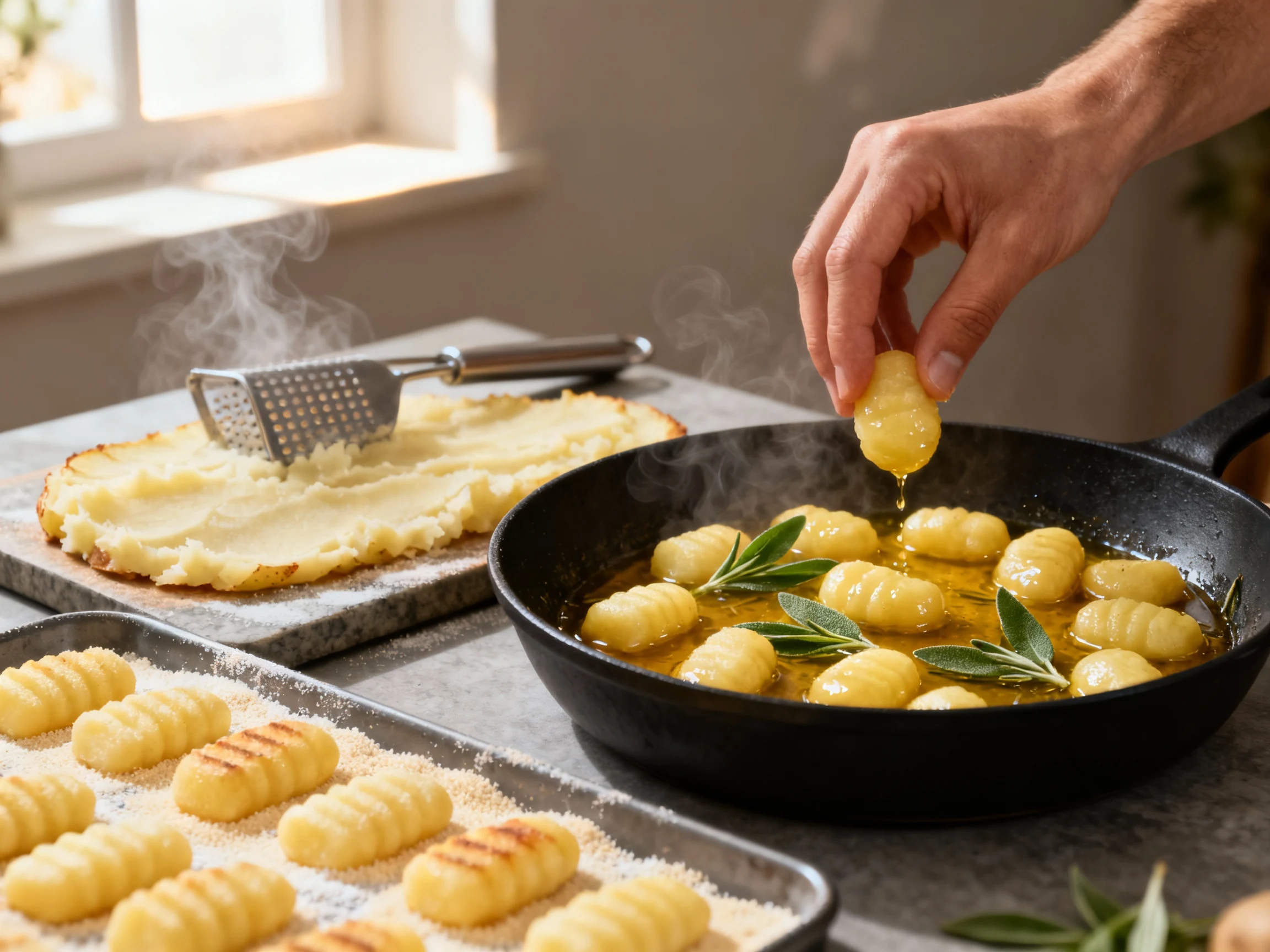
- Rice while hot, then let steam off. Peel while still hot (use a towel to protect your hands) and pass through a potato ricer onto a clean board or sheet pan. Spread into a thin layer and let steam off 5–10 minutes. Dry mash is the goal.
- Season and prep your flour. Sprinkle the riced potatoes with the sea salt, black pepper, and nutmeg (if using). Start with 1 cup flour nearby, plus a little extra if needed. FYI, we’ll add flour gradually—no flour dump.
- Bring the dough together gently. Make a well, add the egg yolk (if using) and Parmesan. Sprinkle about half the flour over the potatoes. Using a bench scraper or your hands, fold and press to combine. Add more flour as needed until the dough is soft, barely tacky, and holds together. Stop before it gets stiff.
- Minimal kneading, max tenderness. Knead just 10–20 seconds to smooth the dough. If it’s sticky, dust lightly; if it’s dry and cracking, you added too much flour—mist with a tiny bit of water and fold once or twice. IMO, less handling is better.
- Roll into ropes. Divide dough into 4–6 pieces. On a floured surface, roll each piece into a rope about 1/2 inch thick. Keep the board lightly floured; heavy flour makes rubbery gnocchi.
- Cut and (optional) shape. Cut ropes into 3/4-inch pieces. For ridges, roll each piece down the tines of a fork or a gnocchi board with a gentle thumb press. Transfer to a semolina-dusted tray. Don’t crowd or they’ll stick.
- Boil like a pro. Bring a large pot of well-salted water to a rolling boil. Drop in gnocchi (work in batches), stir once, and let them float. Cook 30–60 seconds after floating for tender centers. Remove with a slotted spoon to a warm bowl.
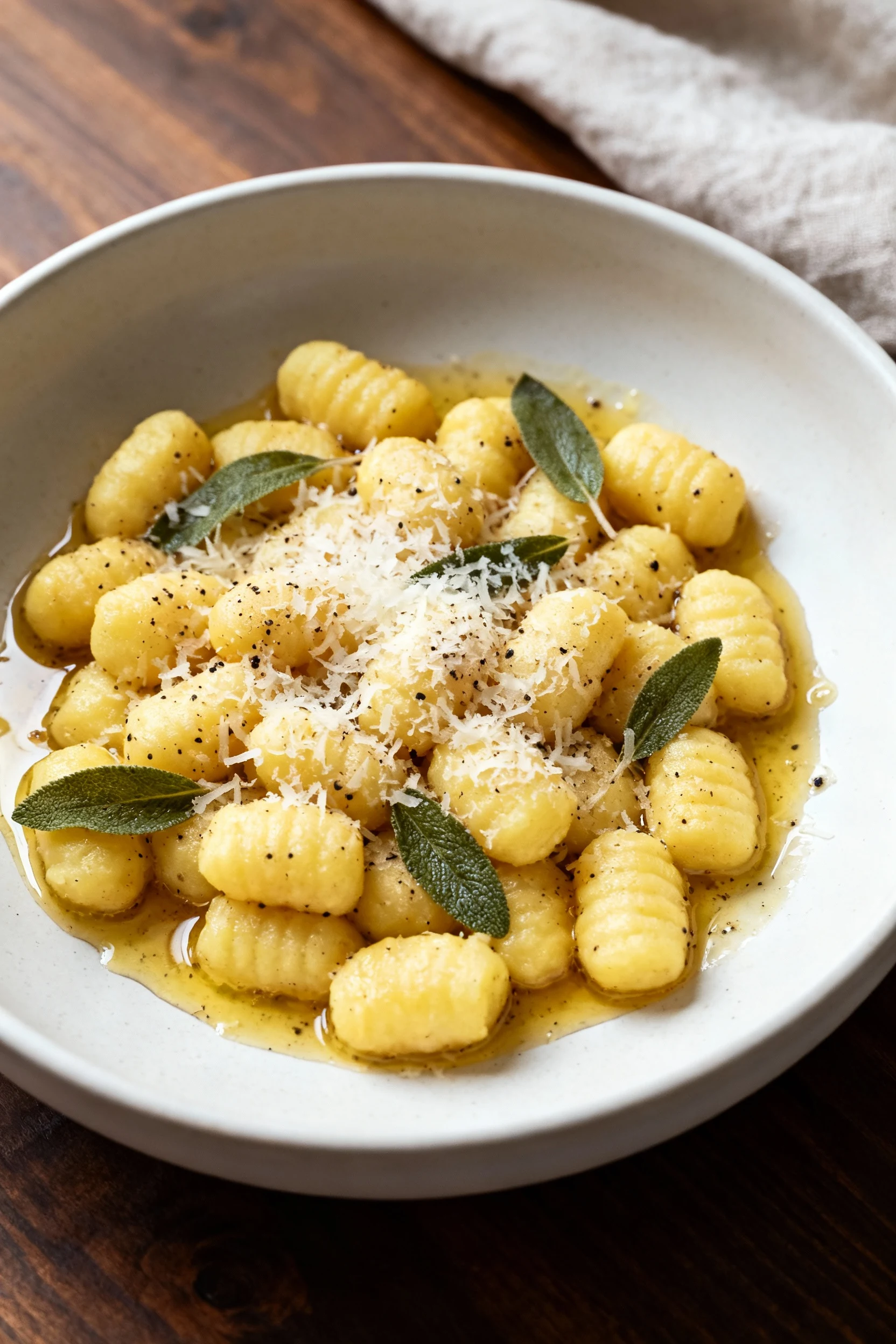
- Make a quick sage brown butter. In a large skillet, melt butter over medium heat until it turns golden and smells nutty, 3–4 minutes. Add sage leaves; let them crisp for 30 seconds. Toss in the cooked gnocchi and coat. Finish with Parmesan.
- Serve immediately. Gnocchi waits for no one. Plate hot, sprinkle extra cheese, and enjoy that soft, airy bite.
Keeping It Fresh
Short-term storage: Uncooked gnocchi can chill for up to 24 hours. Dust with semolina, arrange in a single layer on a tray, cover loosely, and refrigerate. Too long in the fridge and they can get gummy.
Freeze for later: Freeze shaped gnocchi in a single layer until firm, then bag them up for up to 2 months. Cook straight from frozen—add 30–60 seconds to the boil time after they float.
Cooked leftovers: Toss with a little olive oil, cool, and refrigerate up to 3 days. Reheat in a skillet with butter or sauce over medium heat. Microwaving works in a pinch, but a pan adds back that lovely exterior.
Sauces: Store sauces separately if you can. Creamy or tomato sauces keep 3–4 days; pesto is best within 2–3.

Why This is Good for You
Real ingredients, real control. You’re cooking with potatoes, flour, and a few flavor boosters. That’s a short label compared to packaged stuff.
Balanced carbs with options. Pair gnocchi with a veggie-heavy sauce (think tomato-basil or garlicky spinach) and you’ve got a satisfying, balanced plate.
Portion-friendly. Handmade gnocchi is naturally filling, so you eat less and enjoy more. No need to chase calories—just plate smarter.
Lower sodium potential. Salt the water generously, but keep the dough lightly seasoned and you’ll avoid hidden sodium bombs from processed foods.

Pitfalls to Watch Out For
- Boiling potatoes loads them with water, forcing more flour and creating heavy gnocchi. Bake them instead.
- Overworking the dough activates gluten. Fold and press; no knead-athons.
- Too much flour is the fastest path to rubbery dumplings. Add flour just until the dough stops sticking.
- Shaping on a sticky board leads to frustration. Dust with semolina, not just AP flour, for cleaner nonstick.
- Overcooking makes gnocchi soggy. Once they float, give them 30–60 seconds and out they go.
- Skipping the steam-off step leaves excess moisture in the mash. Let hot riced potatoes cool and dry slightly before mixing.
- Undersalting the cooking water results in bland gnocchi. Salt the water like the sea—taste it!
Recipe Variations
- Ricotta gnocchi (gnudi): Swap half the potato for ricotta, drain ricotta well, and use a bit more flour to bind. Super tender.
- Spinach gnocchi: Wilt and squeeze dry spinach; finely chop and fold into the dough with Parmesan. Green and gorgeous.
- Sweet potato gnocchi: Use roasted sweet potato; add a touch more flour and a pinch of cinnamon or nutmeg. Amazing with brown butter.
- Gluten-free: Use a mix of rice flour and potato starch (or a good GF blend). Handle even more gently; GF dough can be delicate.
- Pan-crisped finish: After boiling, sauté gnocchi in olive oil or butter until lightly golden. Crisp outside, soft inside—chef’s kiss.
- Sauce ideas: Sage brown butter, garlicky cherry tomato sauce, basil pesto, creamy gorgonzola, or lemony cream with peas.
FAQ
Do I really need a potato ricer?
No, but it helps. A ricer makes a fluffy, lump-free mash that needs less flour. If you don’t have one, use the smallest-holed grater or mash thoroughly—just avoid big lumps that make gnocchi patchy.
Can I skip the egg yolk?
Yes. Classic gnocchi can be egg-free, especially if your potatoes are dry and starchy. The yolk adds insurance for binding; skip it if you want ultra-soft gnocchi and can handle the dough gently.
Which potatoes work best?
Russets (Idaho) or other starchy potatoes are ideal. Waxy potatoes hold more moisture and make the dough stickier, which means more flour and heavier gnocchi.
How do I know I’ve added enough flour?
The dough should feel soft, slightly tacky, and just hold together without sticking badly to your hands. If it tears or glues itself to the board, dust lightly and fold once more—don’t chase perfection.
Why bake instead of boil?
Baking keeps potatoes dry, so the dough needs less flour and stays tender. Boiling adds water, which forces you to add more flour and risk dense dumplings. Dry potatoes = lighter gnocchi, simple as that.
Can I make the dough ahead?
Shape it into gnocchi and chill up to 24 hours, or freeze for longer. Raw dough left in a lump tends to weep and get sticky. Shape first, store second.
How do I cook from frozen?
Drop frozen gnocchi straight into boiling salted water—no thawing. They’ll sink, then float; give them an extra 30–60 seconds after floating and scoop them out.
What sauces pair best?
Delicate gnocchi loves simple sauces: sage brown butter, tomato-basil, pesto, or light cream with lemon. Heavy meat sauces can overpower the texture, but if that’s your vibe, go for it.
Wrapping Up
Gnocchi seems fancy, but it’s just smart potato management and a light touch. Bake, rice, steam off, add only as much flour as you need, and stop before the dough gets tough. From there, it’s ropes, cuts, a quick boil, and a finish in butter or your favorite sauce. Do it once, and you’ll have a new weeknight flex—pillowy dumplings on demand, FYI, that absolutely taste like you know what you’re doing.